Itential logo
Guide

The Ultimate MCP Guide: 56 Essential MCP Servers for AI-Driven Network Automation

MCP servers for networking and infrastructure are proliferating across every layer of the stack. Here’s the most comprehensive curated list available for AI-driven network automation and what it means for how your team operates.

What are MCP servers for network automation?

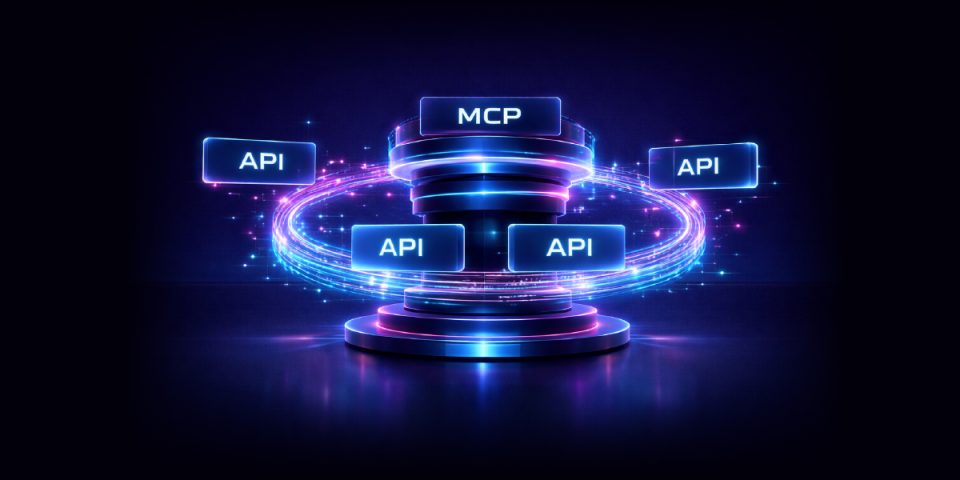
MCP (Model Context Protocol) servers are standardized interfaces that give AI agents governed access to real infrastructure tools, enabling natural language control over network devices, cloud platforms, observability stacks, and ITSM systems. As of March 2026, 56 production-ready MCP servers span every major layer of the network and infrastructure stack.

Key Takeaways

  • MCP has become the connective tissue of AI-native operations, with adoption accelerating across every infrastructure layer.
  • 56 production-ready MCP servers now exist across device automation, cloud, observability, security, incident management, and more.
  • VibeOps – operations driven by natural language intent – is a real, working model today, not a future concept.
  • The network automation market is projected to reach $12.38 billion by 2030 at 18%+ CAGR.
  • Governance primitives – read-only defaults, explicit write flags, Git-based audit trails – are already built into leading MCP servers.
  • Anthropic has moved MCP under the Linux Foundation’s Agentic AI Foundation, signaling industry-wide permanence.

From Scripts to Reasoning: How Did We Get Here?

Network automation has always had the same core problem. The tools were powerful, but the people who could use them were scarce. Ansible, Terraform, Nornir, pyATS – brilliant technologies that required a level of Python fluency, API literacy, and vendor-specific knowledge that most operational teams simply didn’t possess at scale. The automation gap wasn’t a technology gap. It was a translation gap.

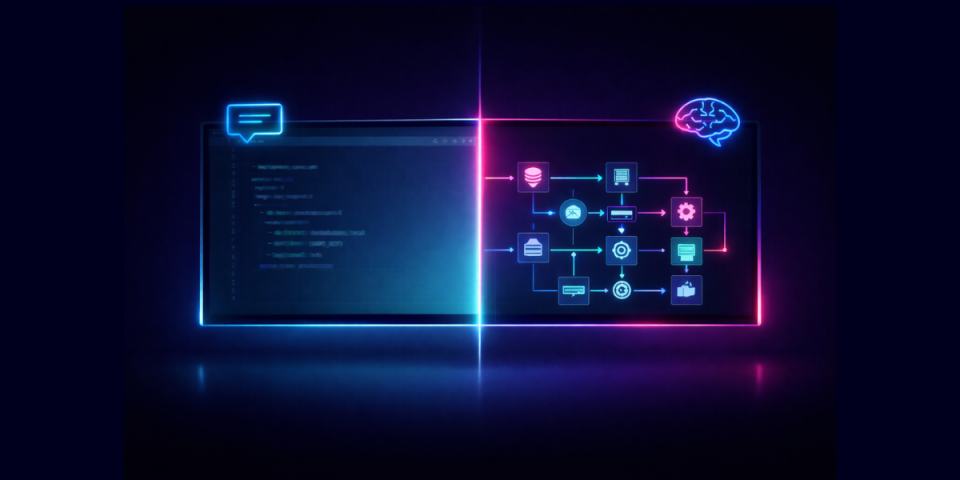
Then large language models arrived, and the calculus changed entirely. LLMs demonstrated that natural language could be a legitimate interface to complex systems. But an LLM on its own is a brain in a jar – it can reason, plan, and generate, but it cannot act. On its own, an LLM cannot reach into your network, query your CMDB, push a config, or check your cloud spend. For that, it needs standardized, discoverable, governed tools it can call reliably and safely.

MCP provides the bridge between the LLM and your network, systems, data, apps, and other resources – enabling the replacement of business logic with reasoning.

56 Servers Across 11 Categories

What follows is the most comprehensive curated list of network automation and infrastructure MCP servers available today. These aren’t aspirations or roadmap items – these MCP servers are shipping, usable, and in many cases production-ready.

Community spotlight: Several of the servers below were built by John Capobianco – a prolific contributor to the network automation MCP ecosystem. His work across pyATS, ACI, ISE, Markmap, and Wikipedia has helped lay the open-source foundation for AI-native network ops.

# MCP Server Transport Why It’s Cool
9 Itential stdio Python The richest MCP tool surface on this list at 65+ tools. Network automation orchestration covering config management, compliance, workflows, golden config, and full lifecycle automation.
1 pyATS stdio Python Cisco’s pyATS framework – the gold standard for network testing – now directly accessible to AI agents. Structured device interaction, Genie parsers, config push, and dynamic test generation.
2 F5 BIG-IP stdio Python Full iControl REST API coverage: virtual servers, pools, iRules, profiles, and stats. Lets an AI agent reason about your load balancer without writing a line of code.
14 Catalyst Center stdio Python Cisco’s DNA Center intent-based networking platform exposed via MCP. Devices, clients, sites, and interfaces – all queryable through natural language.
15 Cisco CML stdio Python Cisco Modeling Labs gets a full MCP wrapper. Lab lifecycle, topology management, node/link control, packet captures, and CLI exec.
38 Juniper JunOS stdio Python Official Juniper server using PyEZ and NETCONF. CLI execution, config management, Jinja2 template rendering, device facts, and batch operations across 10 tools.
39 Arista CVP stdio Python CloudVision Portal REST API access for Arista environments. Device inventory, events, connectivity monitoring, and tag management.
41 Protocol MCP stdio Python Live BGP and OSPF control-plane participation – an AI agent can peer with routers, inject or withdraw routes, and query the RIB and LSDB in real time.
42 ContainerLab stdio Python Full containerized network lab lifecycle via MCP. Deploy, inspect, exec, and destroy labs running SR Linux, cEOS, FRR, IOS-XR, or NX-OS.
# MCP Server Transport Why It’s Cool
4 Cisco ACI stdio Python APIC interaction, policy management, and fabric health for Cisco ACI data centers. Makes ACI’s notoriously deep policy model approachable via natural language.
5 Cisco ISE stdio Python Identity Services Engine – the enforcement heart of Cisco’s Zero Trust architecture. Exposes identity policy, posture assessment, TrustSec, and endpoint control.
16 Cisco FMC stdio Python Firepower Management Center for Cisco’s Secure Firewall platform. Policy search, FTD device targeting, and multi-FMC support.
17 Cisco Meraki stdio Python ~804 API endpoints covering orgs, networks, wireless, switching, security, cameras, and diagnostics. The most comprehensive single-vendor MCP server in the list.
19 ThousandEyes (official) Remote HTTP The official, fuller version: alerts, outages, BGP routes, instant tests, endpoint agents, anomalies, and AI views across ~20 tools. Hosted.
43 Cisco SD-WAN stdio Python vManage read-only monitoring across 12 tools: fabric devices, WAN Edge inventory, templates, policies, alarms, BFD sessions, OMP routes, and control connections.
# MCP Server Transport Why It’s Cool
6 NetBox stdio Python Read-write access to the most widely deployed open-source DCIM/IPAM platform. AI agents can query and update your source of truth directly.
7 Nautobot stdio Python The Red Hat-backed NetBox evolution. Five tools covering IP addresses, prefixes, VRF, tenant, and site filtering.
8 OpsMill Infrahub stdio Python Schema-driven SoT with versioned branches and GraphQL queries. The GitOps-for-infrastructure data model with ten tools covering the full lifecycle.
10 ServiceNow stdio Python Incidents, change requests, and CMDB. AI agents that can open tickets, query asset state, and act on ITSM data without a human copy-pasting between systems.
# MCP Server Transport Why It’s Cool
21 AWS Network uvx Python 27 tools covering VPC, Transit Gateway, Cloud WAN, VPN, Network Firewall, and flow logs. The deepest AWS networking MCP server available.
22 AWS CloudWatch uvx Python Metrics, alarms, and Logs Insights queries. Give your AI agent eyes on your AWS observability data.
25 AWS Cost Explorer uvx Python Spending analysis, forecasts, and anomaly detection. AI-driven FinOps without exporting CSVs.
47 Terraform Docker The IaC standard gets an AI brain. Provider docs, modules, policies, and Stacks support from the Terraform Registry.
48 HashiCorp Vault Docker Natural language secrets operations. If your AI agent spots a hard-coded credential, Vault MCP can remediate it in the same conversation.
55 AWS MCP Server Remote HTTP One managed remote server with access to 15,000+ AWS APIs, full documentation, and pre-built Agent SOPs for common multi-step tasks.
# MCP Server Transport Why It’s Cool
44 Grafana uvx Go 75+ tools across Prometheus PromQL, Loki LogQL, alerting, incidents, OnCall, annotations, and panel rendering.
45 Prometheus stdio Python Direct PromQL without Grafana overhead. Instant and range queries, metric discovery, metadata, and scrape target health in 6 focused tools.
51 Datadog Remote HTTP Full-stack observability. Logs, metrics, traces, dashboards, network device monitoring, synthetics, LLM observability, and code security scanning.
52 Dynatrace Remote HTTP Davis AI-powered observability. Problems, root cause analysis, and security – all accessible via MCP.
53 New Relic Remote HTTP 35+ tools spanning APM, infrastructure, NRQL queries, alerts, and synthetics. Official.
# MCP Server Transport Why It’s Cool
54 PagerDuty stdio uvx Official server. On-call schedules, escalation policies, event orchestration, incident workflows, and status pages. Read-only by default; write tools opt-in.
10 ServiceNow stdio Python ITSM lives at the intersection of both source of truth and incident management – incidents, change requests, and CMDB all in one server.
31 NVD CVE stdio Python Direct access to the NIST National Vulnerability Database with CVSS scoring. Ask your agent whether a device has known critical CVEs before you touch it.
49 Vault Radar Docker AI-powered leaked secret discovery across GitHub, AWS, and Azure.
5 Cisco ISE stdio Python Also listed in Cisco Suite – identity and posture are fundamentally security functions. Zero Trust enforcement through natural language.
# MCP Server Transport Why It’s Cool
12 GitHub Docker Go Issues, PRs, code search, Actions, and config-as-code workflows. Your network automation code lives here. Your AI agent should too.
33 GAIT stdio Python Git-based AI tracking and audit. Purpose-built for tracking AI-generated changes to infrastructure code – the governance layer VibeOps needs.
11 Microsoft Graph npx OneDrive, SharePoint, Visio, Teams, and Exchange. Connects AI agents to the collaboration and document layer, including Visio network diagrams.
# MCP Server Transport Why It’s Cool
34 Wikipedia stdio Python The fastest path for an AI agent to ground itself in technology standards, protocol definitions, and vendor context.
37 RFC Lookup npx IETF RFC search and retrieval. When your agent needs to know exactly what an RFC says, it can look it up rather than hallucinate.
32 Subnet Calculator stdio Python IPv4 and IPv6 CIDR subnet calculation. Simple, but the kind of precise utility that agents need to get right every single time.
# MCP Server Transport Why It’s Cool
35 Markmap stdio Node Hierarchical mind map generation from markdown. Feed it a complex multi-domain problem and watch the dependencies become visual.
36 Draw.io npx The ubiquitous enterprise diagramming tool gets MCP support. Network topology generation from natural language or live data.
40 UML MCP stdio Python 27+ diagram types via Kroki – nwdiag, rackdiag, packetdiag, C4, Mermaid, D2, Graphviz, ERD, BPMN, and more. Rack diagrams from AI? Yes.
56 Excalidraw stdio Node Streams hand-drawn-style architecture diagrams with smooth viewport control and interactive fullscreen editing.
# MCP Server Transport Why It’s Cool
13 Packet Buddy stdio Python Deep pcap and pcapng analysis via tshark. AI-assisted packet capture analysis – describe what you’re seeing in the trace and let the agent find the anomaly.
46 Kubeshark Remote HTTP Go Kubernetes L4/L7 traffic analysis with eBPF-based TLS decryption. Capture, pcap export, snapshots, KFL filtering, and TCP/UDP flow stats.

What Does VibeOps & AI-Driven Network Automation Mean for Network Engineers?

VibeOps emerged in early 2025, coined in the wake of Andrej Karpathy’s “vibe coding” – the practice of building software by describing intent to an AI in natural language and iterating in flow, rather than writing every line by hand. VibeOps extends that philosophy to the full operational lifecycle: infrastructure, deployment, monitoring, and incident response, all driven by intent rather than scripted procedure.

For network engineers, this framing names something that has been building for years. The shift from CLI to API was the first step. Ansible playbooks were another. What MCP enables is the final translation layer: from structured tool invocation to natural language intent, with AI handling the mapping between what you mean and what the toolchain needs to execute.

Natural Language Intent

Describe what you want in plain English. The AI maps your intent to the right tools, the right sequence, and the right parameters.

MCP as the Bridge

MCP servers give AI agents governed access to real infrastructure. Not just the ability to talk about it, but the ability to act on it.

Built-in Governance

Read-only defaults, explicit write flags, and audit trails mean VibeOps can be adopted incrementally and safely.

What Does a VibeOps Workflow Look Like in Practice?

An engineer notices unusual traffic patterns and asks an AI agent to investigate. Here’s what happens; all in a single conversational exchange, without leaving the chat interface:

Query L7 flow data

The agent inspects Kubernetes traffic at the packet level, identifying anomalous flows using eBPF-based TLS decryption.

Pull correlated metrics

Corroborates traffic anomalies with time-series data, running instant and range queries against the monitoring stack.

Check path visualization

Validates external reachability and identifies exactly where in the path the issue originates.

Gather log context

Adds application-layer context to the network-layer investigation, correlating logs across the full stack.

Open a change request

Completes the loop – investigation and remediation documented automatically, no copy-pasting between systems.

Proven in production: The Itential team ran a FlowAI Hackathon where 17 AI agents tackled 167 missions based on real network and infrastructure problems – achieving a near 100% success rate. Every tool in that workflow has a production MCP server available today.

How Do You Govern MCP Network Automation Safely?

None of this works without trust, and trust in automation has always been earned incrementally. The right pattern for VibeOps adoption is the same as every prior automation wave: start read-only, build confidence, then extend to write operations within clearly governed policy boundaries. The MCP ecosystem supports this well.

Treat your AI agent like a junior engineer with root access – capable, but supervised. The governance primitives are here. Use them.

Where Is This Going?

The network automation market is projected to reach $12.38 billion by 2030, growing at over 18% CAGR. The drivers are familiar: complexity, security requirements, multi-cloud proliferation, 5G edge expansion, and the persistent shortage of engineers who can manage all of it manually.

The industry spent the last decade building the automation primitives – APIs, SDKs, network orchestration platforms, source-of-truth systems. MCP is the universal adapter that makes those primitives accessible to AI agents operating in natural language. Anthropic has moved MCP into the Agentic AI Foundation under the Linux Foundation. Every major vendor has a server in development or production. The protocol has, by any reasonable measure, won.

The question for network and infrastructure teams in 2026 is not whether to engage with MCP and VibeOps, it’s how fast to move and with what governance model. The tools are here. The ecosystem is real. The vibes, as it turns out, are very good.

Ready to Start Your VibeOps Journey?

Explore how Itential’s network automation platform and MCP server provide the governance layer your AI agents need to operate safely in production.

Further Reading

Frequently Asked Questions

What are MCP servers for network automation?

MCP (Model Context Protocol) servers are standardized interfaces that give AI agents governed access to real infrastructure tools, enabling natural language control over network devices, cloud platforms, observability stacks, and ITSM systems. As of March 2026, 56 production-ready MCP servers span every major layer of the network and infrastructure stack.

How do MCP servers connect to network devices?

Most network MCP servers communicate via existing management interfaces — NETCONF, RESTCONF, REST APIs, or SSH-based CLI. The MCP server acts as a translation layer: it exposes structured tools to the AI agent, and underneath, it’s making the same API calls you’d make manually. If you can automate it with Python today, you can wrap it in an MCP server and give your AI agent access to it.

How is VibeOps different from traditional network automation with Ansible or Terraform?

Ansible and Terraform require you to know what you want and write it out explicitly — playbooks, state files, variable definitions. VibeOps lets you describe intent in natural language and have the AI figure out the tool chain. It’s not a replacement for those tools; in many cases MCP servers sit on top of them. The difference is who does the translation between intent and execution — you, or the AI.

What are the biggest risks of using AI agents in network operations?

The two risks to think about most are blast radius and hallucination. An AI agent with write access to production can make changes at a speed and scale no human would attempt. Start read-only, gate write operations behind explicit flags, and use audit tools like GAIT to track every AI-generated change. Treat your AI agent like a junior engineer with root access — capable, but supervised.

Keep Learning

The Latest in Agentic Operations

Get Started

Agentic infrastructure operations starts here.

See how Itential connects AI reasoning to governed execution across your entire infrastructure.

Talk to our Experts