For years, network engineers have focused on optimizing tasks — writing scripts, automating configurations, and improving operational efficiency. And while that’s incredibly valuable, automation alone doesn’t solve the bigger problem of scalability.
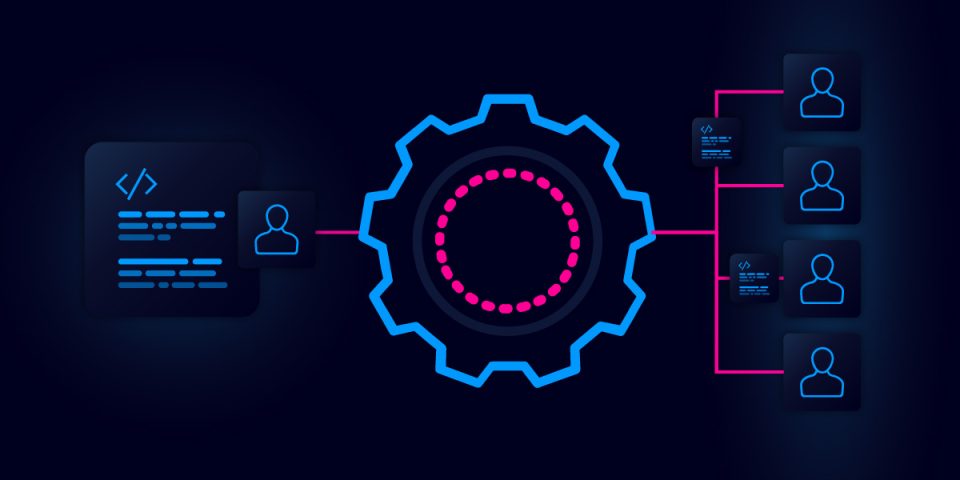
The real shift happens when network teams move from building automation scripts for themselves to delivering automation as a service that anyone in IT can consume. Instead of just writing scripts to make their own jobs easier, engineers can create self-service network automation products that scale across teams and workflows.
This is the product mindset — where automation isn’t just about making individual engineers more efficient but creating repeatable, standardized services that the entire IT organization can consume.
So, what does that actually mean? How do network teams adopt this mindset? And what does network automation as a product look like in practice? Let’s break it down.
What is the Product Mindset in Networking?
A product mindset means thinking beyond just writing automation scripts and instead treating network automation as a service that:
- Is standardized and repeatable – not dependent on specific engineers running scripts manually.
- Can be accessed on-demand – integrated into IT workflows so teams can trigger automation without network engineers manually intervening.
- Delivers a measurable outcome – not just automating steps, but solving a business need like provisioning network access, deploying security policies, or scaling connectivity.
Essentially, it’s the difference between building automation for yourself and building it for an entire IT organization.
Think about how compute and storage teams work: they don’t manually provision servers for every request. Instead, they offer self-service infrastructure where developers can spin up resources in seconds. Network teams need to start thinking the same way.
How to Get Started with the Product Mindset in Network Automation
Shifting to a product mindset doesn’t mean scripting less — it means making scripts part of something bigger. Instead of treating automation as a tool for engineers, it becomes a service that IT teams can rely on just like compute and storage. Here’s how network teams can start:
1. Identify the Most Common & Repetitive Network Tasks
Not everything should be a self-service product, so start by identifying high-volume, repetitive tasks that are prime for automation, such as:
- VLAN provisioning
- Firewall rule changes
- Device onboarding
- Network configuration updates
- DNS or IP address assignments
These are tasks that IT teams frequently request and shouldn’t require network engineers to manually execute every time.
2. Build Automation That Delivers an Outcome, Not Just a Task
Most network automation starts with automating individual tasks — running a script to apply a config, generate a report, or check device status. But in a product mindset, automation is built around delivering a complete outcome.
Example: Automating Network Access for a New Office
Task-Based Automation Approach:
- Engineer writes a script to configure a router.
- A different script applies firewall policies.
- Another script verifies connectivity.
- Each step requires manual execution.
Product Mindset Approach:
One self-service workflow handles the entire process – A request triggers a fully orchestrated workflow that:
- Provisions IP space.
- Configures routers and switches.
- Applies firewall rules.
- Validates the network is operational.
By bundling tasks into a single automated process, engineers eliminate manual intervention and deliver network services like IT delivers infrastructure.
3. Expose Automation Through APIs & Self-Service Portals
Once automation is built around delivering outcomes, the next step is making it accessible to other teams.
- Provide APIs → So developers and IT teams can programmatically request network services without opening tickets.
- Integrate with ITSM tools → Connect automation to ServiceNow, Terraform, Ansible so networking aligns with existing IT workflows.
- Enable self-service portals → Let teams request network services via a web interface or chatbot.
This is how networking moves from being a reactive, ticket-based function to a proactive, API-driven service.
Use Cases: What Network Automation Looks Like as a Product
Let’s look at how real-world use cases shift when network teams adopt a product mindset.
Use Case 1: VLAN Provisioning
Without a Product Mindset:
- A network engineer writes a script to provision VLANs.
- Every time a new VLAN is needed, someone files a ticket.
- The engineer manually runs the script and verifies the change.
With a Product Mindset:
- The VLAN provisioning script is integrated into a self-service portal where teams can request VLANs on-demand.
- API-driven workflows automatically configure the VLAN, update IPAM, and apply security policies.
- Engineers spend less time running scripts and more time optimizing automation.
Use Case 2: Firewall Rule Changes
Without a Product Mindset:
- Security teams request firewall rule updates via tickets.
- A network engineer manually edits configurations and applies the changes.
- Testing and validation require another manual step.
With a Product Mindset: Engineers build a self-service firewall rule change process that includes:
- Automated policy validation before applying changes.
- Pre-approved security workflows to eliminate delays.
- Rollback mechanisms in case of failure.
Now, firewall rule changes can happen securely, at scale, and without unnecessary bottlenecks.
Why the Product Mindset is the Future of Network Automation
Network engineers should keep scripting — but the way we think about automation needs to evolve.
- Instead of writing scripts for one-time use, think about how they can be consumed as part of a broader network service.
- Instead of automating individual tasks, focus on delivering a complete service.
- Instead of manually running automation, expose it through APIs and self-service.
This is how network teams evolve from building automation for their own needs to delivering automation as a product that the entire organization can rely on. It’s not about removing engineers from the process — it’s about making automation repeatable, scalable, and accessible across IT.
By shifting to a product mindset, network teams can spend less time handling tickets and more time designing automation that delivers lasting value.
Want to see how Itential helps network teams adopt the product mindset for automation?










 Agentic Operations Connect AI to infrastructure for trusted, automated actions.
 Infrastructure Modernization Transform legacy networks into modern, AI-ready infrastructure.
 Infrastructure as a Product Deliver network and infrastructure services on demand - self service, governed, & consumed like cloud.
 Hybrid & Multi-Cloud Orchestration Unify hybrid & multi-cloud infrastructure through agentic orchestration.
 Governed Change Management Execute every infrastructure change with pre/post validation, audit evidence, & rollback, human or AI-initiated.