In the last year, I’ve spent a lot of time with CISOs, CIOs, and network security leaders across enterprise verticals from global financial services and critical infrastructure providers. One thing I am convinced of; the topics of discussions and objectives have shifted for these leaders and their teams.
Security leaders aren’t just asking how to detect threats faster. They’re asking:
That shift tells us something important: infrastructure is now a core surface for security control, not just availability.
And in a world where adversaries are exploiting misconfiguration, drift, and policy gaps (not malware), the change in focus and mindset is overdue.
Rich Baich, in Winning as a CISO, makes the case that successful CISOs think like business operators. They prioritize measurable risk reduction, operational repeatability, and alignment to executive strategy.
I see that mindset increasingly reflected in our most forward-leaning customers. They’re thinking beyond alerts. They’re building security programs that have the control surfaces to act on risk, not just report it.
But that raises a new challenge: how do you enforce governance across highly distributed, multi-vendor, hybrid infrastructure at scale?
This is where I believe infrastructure orchestration has evolved. It’s no longer about speeding up changes. It’s about enabling provable, policy-driven infrastructure actions in real time, across domains.
Today’s threats don’t follow the playbooks of the past, and neither can our infrastructure strategies.
Recent campaigns like Volt Typhoon and the broader targeting of critical infrastructure sectors make one thing clear: attackers aren’t just breaching systems, they’re embedding themselves. Not with advanced malware, but through persistent access via misconfigurations, unchanged credentials, weak segmentation, and device-level drift.
These threats persist quietly, often for months, and bypass traditional security tooling by operating within the infrastructure layer itself. And once they’re in, lateral movement and impact can happen in seconds.
This changes the equation:
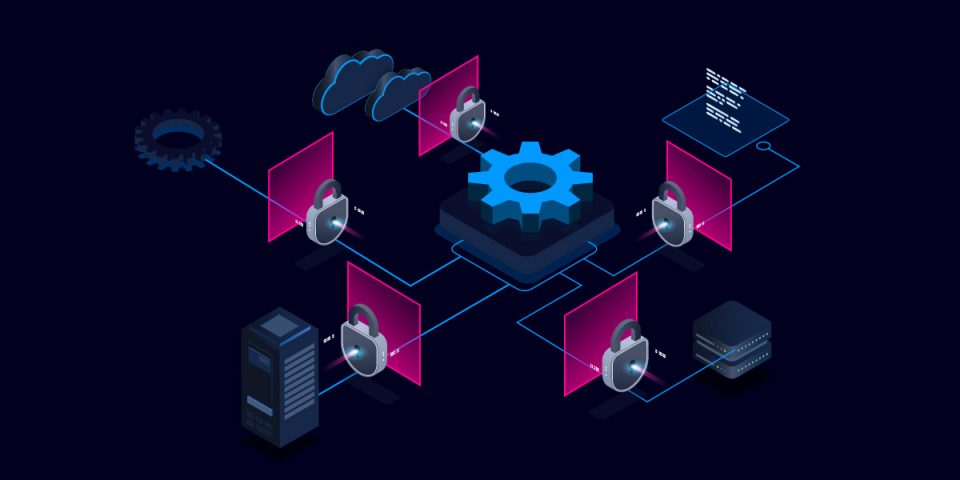
Leaders now face a new reality: infrastructure is not just a dependency for digital operations, it’s a live security surface. And defending it requires more than hygiene. It requires orchestrated, policy-aligned operations that can be enforced at scale and proven at any moment.
At Itential, we’ve worked with some of the world’s most security-conscious organizations to help them operationalize control, not just intent.
Here’s what that looks like in practice:
These are not hypothetical capabilities. Our customers are already deploying them in high-stakes environments.
Global Financial Services: Automating Threat Containment
This team needed to operationalize “Blocking as a Service” from their SOAR platform across a multi-vendor network. With Itential, they now trigger network-level blocks in real-time, regardless of vendor, without custom code.
➡️ Discover how they automated threat response →
Global FinTech: Enforcing Standard Configurations Across the Enterprise
For this customer, security posture started with consistent configuration. They leveraged Itential to standardize configurations across thousands of devices, reduce variance, and dramatically improve audit readiness.
➡️ Learn how they scaled security →
North American Utility: Proving Compliance Every Day
Faced with regulatory oversight, this customer needed to ensure configuration compliance continuously, not just at audit time. Itential enabled automated validation, reporting, and remediation, helping them meet requirements while reducing operational burden.
➡️ Explore their compliance strategy →
Federal Agency: Modernizing Mission-Critical Networks Securely
A federal agency modernized missioncritical networks across domains, clouds, optical layers, and brownfield services by adopting Itential’s automation and orchestration. They streamlined configuration management, enforced security policies, and accelerated service delivery with greater resilience and efficiency.
➡️ See how they hardened network security and modernization →
As the landscape evolves, infrastructure leaders are being asked to deliver more than reliability. They’re being asked to deliver resilience.
That requires a shift from manual processes and one-off scripts to a secure, scalable, and orchestrated infrastructure governance model.
At Itential, we’re building the orchestration layer that makes that model operational, giving our customers real-time enforcement, full auditability, and the ability to translate risk insights into infrastructure action.
If this is a shift your team is making, we’d welcome the opportunity to share what we’ve learned and how other enterprises and infrastructure providers are already leading the way.
See how Itential connects AI reasoning to governed execution across your entire infrastructure.