When Predictions Become Production Reality
For more than a decade, network automation has been “the future.” Scripts replaced manual changes, playbooks promised consistency, and infrastructure-as-code brought discipline to previously artisanal workflows. Over the last three years, artificial intelligence accelerated that momentum dramatically.
But when I wrote my predictions for 2026, I wasn’t speculating from the sidelines. I was speaking from the trenches – from years of building automation, teaching it, writing about it, and now, building the platform that makes it real at Itential.
In 2026, the industry crosses a more consequential threshold. Networking moves from fragmented automation efforts into agent-driven, orchestrated systems that fundamentally change how networks are designed, operated, and staffed.
Every prediction I made isn’t just about where the industry is headed. It’s about what we’re building right now. Let me show you how.
Prediction 1: MCP Was the Bridge; Agents Are the Destination
The Industry Inflection Point
The adoption of Model Context Protocol (MCP) marked a critical turning point for AI in networking. Prior to MCP, large language models operated largely as isolated assistants – useful, but disconnected from enterprise tools, telemetry, and intent. MCP normalized how context is shared between models, tools, and systems, creating a common interface for real-world interaction.
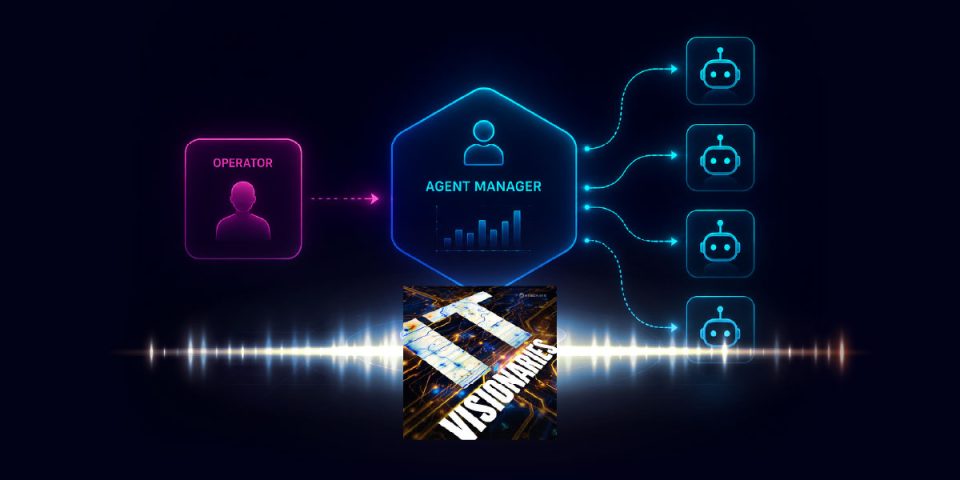
With that foundation now established, the industry is ready to move into Agent Development Kits (ADKs) and Agent-to-Agent (A2A) protocols. In 2026, AI agents are no longer novelty chat interfaces bolted onto tools. They are first-class actors in network operations, capable of reasoning, delegating tasks, coordinating with other agents, and executing changes through controlled workflows.
Instead of a single monolithic “AI,” organizations deploy swarms of specialized agents: agents that understand routing intent, agents that reason over telemetry, agents that validate change risk, and agents that coordinate remediation. A2A communication allows these agents to negotiate actions, validate assumptions, and escalate intelligently – without human intervention for every decision.
How Itential Delivers: FlowAI as the Agentic Orchestration Layer
FlowAI isn’t just another AI feature bolted onto a platform. It’s the culmination of everything MCP enabled – a production-grade agentic orchestration framework built for enterprise infrastructure.
FlowAgent Builder transforms agent development from a coding exercise into a design conversation. You describe what the agent should be – not how to code it. Define its purpose, expertise, and boundaries in natural language. The platform handles the rest.
I experienced this firsthand. I built a fully functional Network Interface Health Agent in two minutes. Not a proof-of-concept. Not a demo. A production-ready agent that:
- Collected live network state from devices
- Dynamically generated health tests on the fly based on actual configurations
- Executed comprehensive validation across error rates, utilization, and anomalies
- Produced detailed diagnostic reports with actionable recommendations
- Delivered notifications via Slack and email
All without writing a single line of test code or integration logic.
Specialized Agent Swarms in Production
Through FlowAI, organizations deploy exactly what I predicted: specialized agents that coordinate intelligently.
- Agents that understand routing intent – Leveraging network domain expertise through curated tools
- Agents that reason over telemetry – Integrating with observability platforms like Selector AI, Kentik, and IP Fabric
- Agents that validate change risk – Coordinating with deterministic workflows for safe execution
- Agents that coordinate remediation – Working together through A2A communication patterns
Agent-to-Agent Coordination
The FlowMCP Gateway enables external agents (NetBox MCP, Selector MCP, and others) to participate in orchestrated workflows under Itential’s governance model. Agents negotiate, validate assumptions, and escalate intelligently – exactly as predicted.
The key insight: MCP was the foundation. FlowAI is the destination. We’re not talking about the future anymore. We’ve built it.
Prediction 2: Orchestration Becomes the Center of Gravity
The End of the Wild West
The early days of network automation were a necessary but messy phase. Scripts lived on laptops, playbooks were duplicated across teams, and jobs were scheduled in isolation. Automation existed, but orchestration was optional.
That era is ending.
In 2026, orchestration becomes the backbone of serious network automation programs. As AI agents become capable of initiating actions, the need for centralized coordination, policy enforcement, and lifecycle control becomes non-negotiable. The “wild west” of automation – where every team reinvents workflows and nothing is reusable – gets replaced by shared, governed, and extensible orchestration frameworks.
This shift mirrors what happened in application development years ago. Individual scripts gave way to pipelines; pipelines gave way to platforms. Networking is following the same maturation curve.
How Itential Delivers: The Platform Built for Orchestration
This is what we do. This is literally why the company exists.
The Itential Platform provides:
- Workflow Orchestration – Visual, low-code workflow builder with high-code extensibility
- Lifecycle Management – Stateful orchestration across the entire infrastructure lifecycle
- Configuration Validation – Automated pre/post-change validation with rollback logic
- Self-Service Operations – Governed access for teams to consume infrastructure services
- Automation Gateway (IAG) – The bridge connecting deterministic automation tools (Ansible, Terraform, pyATS) with agent-driven reasoning
The Hybrid Model: AI + Deterministic Workflows
Here’s the secret sauce I discovered building that Network Interface Health Agent:
AI agents provide dynamic reasoning. Deterministic workflows provide reliable execution.
When my agent needed to send Slack notifications, it didn’t improvise. It called a pre-built, battle-tested workflow. No wrestling with REST APIs. No OAuth token management. No random failures in production.
This hybrid model eliminates entire categories of problems:
- No more duct-taped integrations breaking in production
- No more “works on my laptop” automation
- No more teams reinventing the same workflows
- No more unauditable, ungoverned agent actions
Orchestration isn’t optional anymore. It’s the foundation that makes AI agents trustworthy in production environments.
Observability & Governance
Every agent invocation flows through the platform. Every workflow execution is logged, auditable, and traceable. Every tool call is governed by policy. This is what enterprises need to adopt AI with confidence – not promises of “move fast and break things,” but proven infrastructure-grade reliability.
Prediction 3: Agent-Driven Operations Replace Static Runbooks
The Limitations of Linear Thinking
Runbooks have always been a compromise. They document what humans should do when something goes wrong, but they rarely reflect the full complexity of modern networks. In 2026, static runbooks are increasingly replaced by agent-driven operational logic.
AI agents ingest real-time telemetry, configuration state, historical incidents, and intent models to determine not just what failed, but why. Rather than following a linear checklist, agents explore multiple hypotheses, validate them against live data, and coordinate corrective actions through orchestrated workflows.
This doesn’t eliminate human oversight – it elevates it. Engineers move from executing steps to supervising systems, refining intent, and approving high-impact changes. Operations become less about reaction and more about continuous optimization.
How Itential Delivers: Dynamic Intelligence in Action
Dynamic Test Generation
My Network Interface Health Agent didn’t follow a static runbook. It:
- Connected to the device
- Discovered interfaces dynamically
- Generated health tests based on what it actually found
- Analyzed results in real-time
- Produced recommendations
No pre-written assertions. No brittle test logic that breaks when vendors change CLI outputs. Just adaptive, intelligent validation.
Integration with Observability Platforms
Through the Itential Marketplace and FlowMCP Gateway, agents integrate with:
- Selector AI – AI-driven observability and configuration intelligence
- Kentik – Network traffic analysis and anomaly detection
- IP Fabric – Network discovery and topology mapping
- Forward Networks – Digital twin and predictive analysis
Agents don’t just react to failures. They reason about root causes, explore multiple hypotheses, validate against live data, and coordinate corrective actions through orchestrated workflows.
Human-in-the-Loop by Design
Engineers aren’t replaced. They’re elevated. Instead of executing manual runbooks, they:
- Supervise agent actions
- Refine intent models
- Approve high-impact changes
- Optimize operational patterns
Operations shift from reaction to continuous optimization – exactly as predicted.
Prediction 4: The Skills Divide Will Become Structural
The Time for Adaptation Has Passed
The networking industry has had ample time to adapt. Automation has been mainstream for over a decade. AI-assisted workflows have been viable for three years. Retrieval-augmented generation (RAG) and knowledge grounding have matured over two. MCP has been available for a year.
By 2026, patience runs out.
Organizations increasingly reduce roles that rely solely on manual execution and institutional knowledge, while expanding roles focused on automation design, orchestration, and agent supervision. This is not about replacing people with AI; it is about replacing non-scalable practices with systems.
Engineers who embrace automation, understand orchestration, and can reason about agent behavior will thrive. Those who resist these shifts will find fewer opportunities. The industry will move forward, with or without them.
How Itential Addresses This: Accessibility Without Sacrifice
Democratizing Advanced Automation
Here’s the shift I experienced moving from traditional NetDevOps to FlowAI:
Old way: You needed deep Python expertise, understood pyATS internals, wrote hundreds of lines of parsing logic, built custom integrations, maintained brittle code.
FlowAI way: You describe outcomes in natural language. The platform handles execution. Network engineers who understand their domain can build sophisticated automation without becoming full-time developers.
This democratizes automation – making it accessible to the engineers who understand networks best, while maintaining the power and flexibility that developers need.
Developer Empowerment Through Choice
For those who want to code, we haven’t taken anything away. In fact, we’ve made it better:
- torero – Our open-source Python CLI framework for network automation
- High-code extensibility – Full API access to the platform
- pyATS MCP Server – Open-source bridge between AI and Cisco pyATS (I wrote it!)
- Itential MCP Server – Open-source bridge between AI and the Itential Platform (Peter Sprygada wrote this one!)
- Integration ecosystem – Connect to the tools you already use
The skills divide isn’t about replacing people with AI. It’s about replacing non-scalable practices with systems that scale.
Building the Community
We’re building the community that grows these skills:
- VibeOps Forum – 400+ members in two weeks, collaborating on agentic infrastructure
- Itential Academy – Training programs for orchestration and AI-augmented operations
- Interactive product tours – Hands-on learning experiences
- Professional services – Helping teams make the transition successfully
Engineers who engage with these resources are already ahead. Those who resist will find fewer opportunities – not because of malice, but because the industry is moving forward.
Prediction 5: Networking Becomes Intent-First, Not Device-First
The Final Decoupling
As agents and orchestration mature, networking finally decouples from device-level thinking. Engineers define outcomes – performance, security posture, resilience – and let agent-driven systems determine the optimal execution across vendors, domains, and layers.
This transition has been promised before, but 2026 is different. The combination of MCP, agents, A2A protocols, and orchestration provides the missing pieces to make intent-driven networking operationally viable at scale.
How Itential Delivers: From Natural Language to Infrastructure Actions
Intent-Based Agent Design
When I built that Network Interface Health Agent, I didn’t write:
def validate_interface(device, interface):
    output = device.execute(f"show interface {interface}")
    if parse_errors(output) > threshold:
        send_alert()
I wrote:
“You are a network interface health expert responsible for validating interface state, error conditions, utilization metrics, and operational anomalies.”
That’s intent. The platform translates intent into actions.
Vendor-Agnostic Execution
The Itential Platform integrates with 100+ network vendors, cloud providers, and IT systems through the Automation Gateway and pre-built adapters:
- Network vendors: Cisco, Juniper, Arista, Palo Alto Networks
- Cloud platforms: AWS, Azure, Google Cloud
- IT systems: ServiceNow, NetBox, Infoblox
- Automation tools: Ansible, Terraform, Jenkins
Agents don’t care about vendor CLI quirks. They define outcomes. The orchestration layer handles vendor-specific execution.
Cross-Domain Coordination
Through FlowAI and the Itential Platform, a single intent can trigger coordinated actions across:
- Network devices (routers, switches, firewalls)
- Cloud infrastructure (VPCs, subnets, security groups)
- IT service management (ServiceNow tickets, approvals)
- Observability platforms (telemetry, alerts, dashboards)
This is true intent-driven infrastructure – not just for networks, but for the entire hybrid cloud environment.
The Missing Pieces, Delivered
My prediction identified what was needed:
- ✅ MCP – We built the Itential MCP Server (open source)
- ✅ Agents – FlowAgent Builder and FlowAgents
- ✅ A2A protocols – FlowMCP Gateway for external agent coordination
- ✅ Orchestration – The Itential Platform as the backbone
All of it. In production. Today.
Closing Thoughts: The Future Is Already Here
In 2026, networking will no longer be measured by how quickly humans can respond, but by how well systems can reason, coordinate, and execute. The organizations that succeed will be those that treat AI agents and orchestration not as add-ons, but as foundational infrastructure for modern network operations.
When I joined Itential, I wrote about orchestrating the future. About moving beyond scripts and duct-taped integrations toward something more elegant, scalable, and human.
I believed it was possible.
Now I’ve built it. I’ve used it. I’ve watched it work in production environments.
Every prediction I made for 2026 isn’t speculation – it’s documentation of what we’re delivering right now:
- Agents as first-class actors – FlowAI provides the framework
- Orchestration as the backbone – The Itential Platform provides the foundation
- Agent-driven operations – Dynamic reasoning replaces static runbooks
- Skills evolution – We’re making advanced automation accessible
- Intent-first infrastructure – Natural language to infrastructure actions at scale
That future isn’t coming. It’s here. At Itential. In FlowAI.
And honestly? Once you’ve experienced automation at the speed of thought – once you’ve built a production-grade agent in two minutes – there’s no going back.
The organizations that succeed will treat AI agents and orchestration not as add-ons, but as foundational infrastructure for modern network operations.
We’re ready. The platform is ready. The question is: are you?
Want to See It for Yourself?








 Agentic Operations Connect AI to infrastructure for trusted, automated actions.
 Infrastructure Modernization Transform legacy networks into modern, AI-ready infrastructure.
 Infrastructure as a Product Deliver network and infrastructure services on demand - self service, governed, & consumed like cloud.
 Hybrid & Multi-Cloud Orchestration Unify hybrid & multi-cloud infrastructure through agentic orchestration.
 Governed Change Management Execute every infrastructure change with pre/post validation, audit evidence, & rollback, human or AI-initiated.