Gartner’s recent Market Guide for Infrastructure Automation and Orchestration Tools explores the recent history of infrastructure automation and orchestration (IA&O), assesses the current state of the market, and offers a clear set of recommendations moving into the future.
“The continued adoption of cloud, DevOps and platform engineering requires the expansion of infrastructure automation and orchestration capabilities to meet user demands. Leaders in Infrastructure & Operations (I&O) must evolve practices to accelerate and optimize infrastructure delivery, mitigate risk, and enable autonomy.”
The industry is evolving, coalescing around new approaches and tools to orchestrate changes across different infrastructure domains and support the needs of a rapidly evolving business and technology landscape.
The 3 Components of Infrastructure Automation & Orchestration
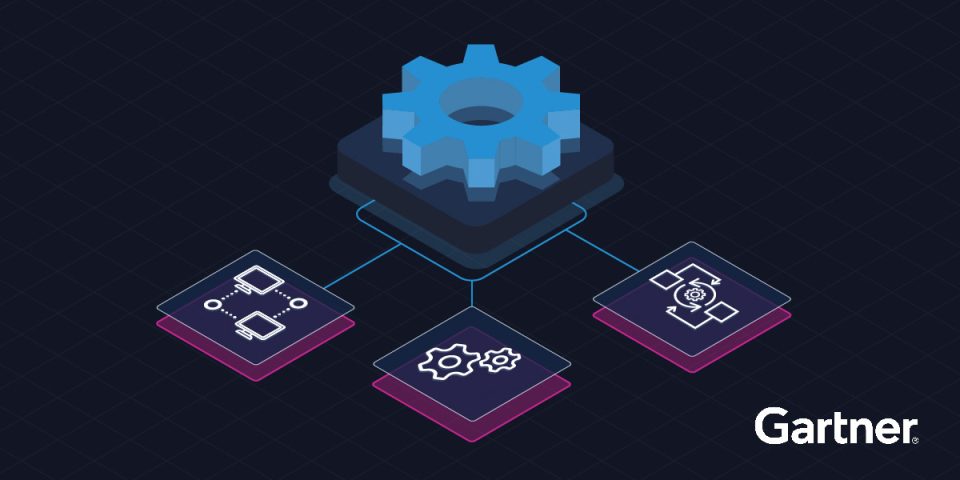
The report looks at IA&O tools and breaks them into three categories: provisioning automation, configuration automation, and infrastructure orchestration. It’s by bringing all three of these together that I&O organizations can achieve the velocity they need across complex infrastructure ecosystems.
Provisioning Automation
I&O teams leverage provisioning automation to accelerate the deployment of new infrastructure when compared to manual deployment. Most organizations have some amount of legacy provisioning automation for on-premises infrastructure, but teams also adopt provisioning automation to consume cloud infrastructure efficiently. Often, teams must leverage a variety of different domain-specific tools to support hybrid infrastructure deployment across on-premises, private and public cloud, edge, and colocation.
Configuration Automation
Teams adopt configuration automation tooling to automate inventory activities, configuration management, patching, software delivery, and operational automation. Whether it’s task-specific scripts built with open source tooling like Python and Ansible, or vendor-provided domain automation tools, teams will use a variety of methods according to the needs of a complex, diverse infrastructure ecosystem.
Infrastructure Orchestration
Infrastructure orchestration platforms are built to interface with the breadth of domain-specific and high-code automation assets that exist across different infrastructure teams. They enable teams to build and execute complex delivery and operational workflows by leveraging provisioning and configuration automation in conjunction with API calls to other critical IT systems and platforms, sequencing a series of automated activities to produce an end-to-end outcome that can be delivered and consumed via API.
How the Industry Is Evolving With Infrastructure Orchestration
You can view infrastructure orchestration as the last piece of the IA&O puzzle. Provisioning and configuration automation are about automating tasks, keeping up with request volumes and/or ticket volumes to be able to handle increased infrastructure demand from application teams. But domain-specific automation tools create silos as different teams build automations within their own verticals. When infrastructure consumers are asking for services that span multiple infrastructure domains, an I&O organization with silos of capability can only deliver those services so fast.
That’s why adoption of infrastructure orchestration is increasing. It’s “been driven by the recognition that velocity improvements require the adoption of workflows to deliver infrastructure services, either via self-service or API.”
For I&O organizations, the ability to orchestrate complex services and deliver them in a scalable manner represents a significant opportunity. Orchestration enables processes to be standardized and repeatable, enhancing the way infrastructure is consumed by business-critical processes and supporting key priorities: treating infrastructure as code and implementing platform engineering.
Together, these capabilities are the building blocks of an infrastructure as a product model — where platform teams deliver versioned, governed services instead of responding to one-off tickets.
Orchestration & Platform Engineering
When infrastructure automation tools are paired with orchestration capabilities, teams can provide “on-demand, self-service access to standardized infrastructure products, either by API or console.” When the approach is integrated with an internal developer portal (IDP), organizations will:
- Significantly reduce friction between teams, accelerating collaboration.
- Reduce developer cognitive load.
- Embed organizational security and compliance requirements in the services offered through the IDP.
- Embed any cost requirements directly into services.
As stated in the report, “DevOps, platform engineering, and I&O teams are using IA&O tools to automate the delivery and operation of infrastructure with autonomy, scale and greater reliability.” See this page to learn more about applying platform engineering principles to infrastructure automation and orchestration.
The Impact of Successful Infrastructure Automation & Orchestration
“Infrastructure orchestration tools represent an opportunity for organizations to address the fragmentation of capabilities by combining provisioning and configuration automation into workflows that deliver repeatable, iterative services.”
By bringing together the three pillars of infrastructure automation and orchestration, organizations can ensure everyone benefits:
- I&O Teams: Automation of manual tasks increases the efficiency of team members and allows a shifting of work to higher-value tasks. Orchestration that integrates with external IT systems allows teams to enforce security, compliance, cost, and resilience requirements more tightly by embedding them into infrastructure workflows. The flexibility of a mature IA&O environment will allow teams to build services driven by consumer needs, instead of services limited by I&O capabilities and requirements.
- Consumers of Infrastructure Services: Internal and external infrastructure consumers can self-serve infrastructure with platforms like ServiceNow or custom-built IDPs. The delivery of fully orchestrated services that leverage domain-specific configuration and provisioning automation allows consumers to receive services instantly, reducing friction between business processes and the underlying infrastructure needed to support them.
What’s clear in Gartner’s report is this: the market is evolving rapidly, and it’s time for I&O organizations to evolve to support the needs of both I&O teams and the infrastructure consumers who are driving the need to accelerate in the first place. At the end of the report, Gartner provides a list of recommendations for I&O leaders selecting and implementing IA&O tools:
- Select a portfolio of IA&O tools based on what capabilities are targeted for automation (DevOps activities, traditional IT operations or both).
- Determine whether the tooling strategy will have a single tool interacting with multiple infrastructure platforms, or targeted tools for each infrastructure platform.
- Address skill development needs by investing in training and implementation efforts.
- Derive maximum value from the adoption of IA&O by ensuring that organizational culture change is embedded. Developers and administrators may be tempted to revert to known scripting methods to get a particular job done.
- Implement a tool management strategy to regularly review and adjust the toolset, enabling rapid expansion or replacement of tools as organizational demands change.
By following these recommendations, organizations who successfully adopt comprehensive infrastructure orchestration while continuing to invest in and expand their use of provisioning and configuration automation tools will be able to accelerate infrastructure deployments while maintaining operational excellence.
Dive into the full Gartner Market Guide for Infrastructure Automation and Orchestration Tools here. To learn how Itential’s IT orchestration and automation platform supports infrastructure orchestration and integrates with all IT platforms and infrastructure automation tools, see this page.











 Agentic Operations Connect AI to infrastructure for trusted, automated actions.
 Infrastructure Modernization Transform legacy networks into modern, AI-ready infrastructure.
 Infrastructure as a Product Deliver network and infrastructure services on demand - self service, governed, & consumed like cloud.
 Hybrid & Multi-Cloud Orchestration Unify hybrid & multi-cloud infrastructure through agentic orchestration.
 Governed Change Management Execute every infrastructure change with pre/post validation, audit evidence, & rollback, human or AI-initiated.