






















EMA’s latest research reveals why scripts dominate network automation today and how teams can move beyond them to achieve orchestration, consistency, and self-service delivery.
The EMA research reveals a split perspective within organizations: network engineers favor homegrown scripts and open-source playbooks for their flexibility and control, while IT leadership sees commercial platforms as essential for consistency, security, and scalability. Scripting and open source remain the go-to solutions for immediate needs and niche use cases, but as demands for orchestration, governance, and cross-team visibility grow, leadership is pushing for modular, extensible platforms that can integrate – not replace – what teams have already built. This tension reflects a deeper truth: the future of network automation is not about choosing between DIY and commercial platforms – it’s about bridging them.
This tension between daily engineering needs and broader leadership goals shapes how automation evolves across the enterprise.
61% of network teams taking a DIY approach to automation spend six or more hours each week maintaining and debugging these tools.
64% of IT organizations are seeking low- or no-code network automation solutions to drive standardization and scale.
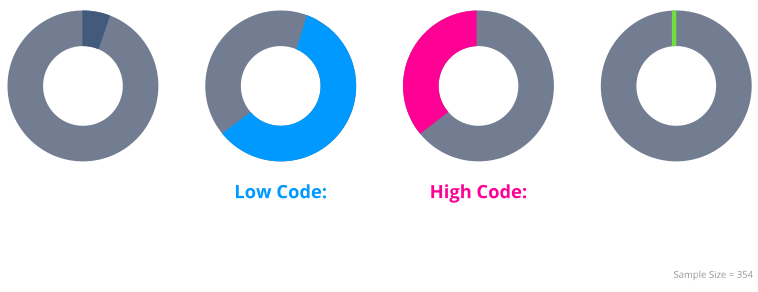
While engineering teams continue to rely heavily on code-heavy approaches for network automation, EMA’s research found that many IT leaders want to see another path forward. In fact, 64% of IT organizations are actively looking for low- or no-code solutions to drive standardization and scale. Yet homegrown automation efforts – by nature – remain high-code and labor-intensive, requiring constant development and refinement as needs evolve.




While homegrown scripts and tools help network teams tackle immediate challenges, they’re not without serious hurdles. The EMA report reveals that even engineers deeply committed to scripting acknowledge the growing pains: from skill gaps and tool complexity to maintenance headaches and security risks. As networks scale, these challenges threaten to slow progress and erode the very flexibility that makes homegrown solutions attractive in the first place.
Building and managing code-heavy automation requires engineers with a rare blend of network and development skills – talent that’s hard to find and retain.

DIY tools grow messy over time. Poor documentation, inconsistent processes, and ad-hoc fixes make it harder to sustain progress.
Supporting and securing homegrown automation is an uphill battle, especially as original builders move on or documentation gets lost.
Most homegrown solutions rely on scripts strung together manually, which break easily when used in unintended ways.
Tools built for one job often get pressed into others, and that mismatch leads to failures and confusion.
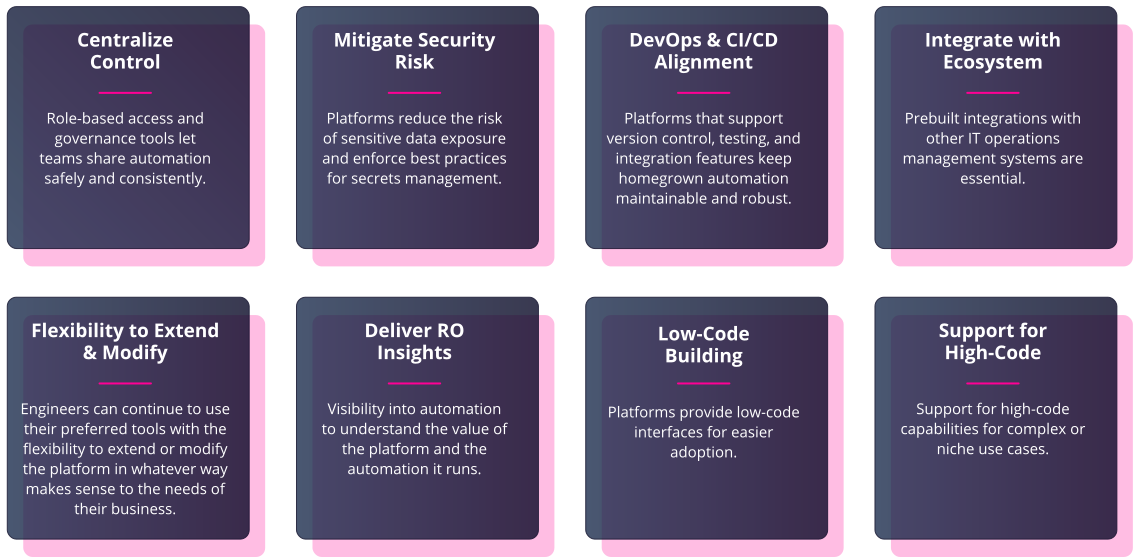
While homegrown scripts and playbooks offer control and flexibility, the EMA research shows that platforms play a critical role in taking automation to the next level. By centralizing governance, providing security, and enabling integration, platforms help teams transform one-off scripts into coordinated, scalable workflows that work across the enterprise.
The key isn’t to abandon homegrown tools – it’s to bring them together in a way that makes them more secure, reliable, and sustainable.
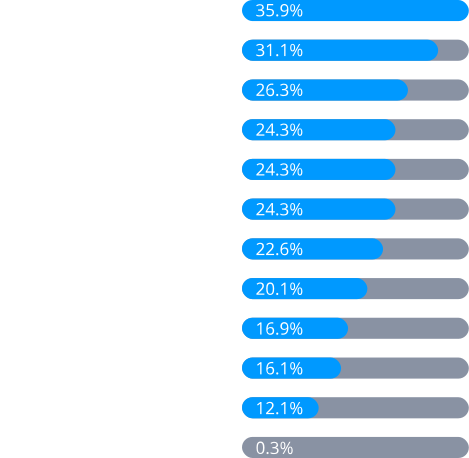
Which of the following are the most compelling reasons to adopt commercial network automation solutions, as opposed to DIY network automation?
The EMA report features Armstrong’s journey as they scaled from Python scripts to orchestrated, self-service network services. By using Itential, Armstrong didn’t have to abandon their existing work — they brought their scripts into a secure, modular environment and grew them into coordinated workflows that could be exposed through self-service APIs. The result? Significant time savings, faster delivery of network services, and a more strategic approach to infrastructure automation.


Itential delivers a modular automation and orchestration platform that helps network and infrastructure teams evolve from homegrown scripts and fragmented tooling to secure, scalable, and integrated automation. Instead of requiring teams to replace what they’ve already built, Itential enhances it, providing the automation execution, orchestration and self-service capabilities needed to mature network automation into a strategic capability.




Download EMA’s research report to dig into why scripts still dominate network automation, the limits of DIY tooling, and how platforms can integrate and extend existing homegrown work — turning one-off scripts into scalable, governed services.