I’ve seen it countless times. A ticket requests “a VM with X, Y, and Z.” You’ve built automations, written scripts, created workflows. Yet somehow, every request still feels like starting from scratch.
What I’ve realized: You’re not running a network anymore. You’re operating a product line. This isn’t just fancy talk. It’s a fundamental shift that transforms how infrastructure gets delivered.
Network expectations have evolved dramatically. Luckily, our capabilities have too. Today’s stakeholders expect the cloud experience everywhere: services on demand with security, compliance, and lifecycle management built in. They don’t want components provisioned — they want complete services. Standardized, consistent, and scalable. As requests multiply, management complexity explodes.
This is where a product mindset becomes essential.
The pattern is clear: Teams have mastered automation but still think about infrastructure pieces rather than cohesive services. We’re great at automation, but struggle with managing services throughout their lifecycle. This disconnect creates major operational headaches.
When you treat infrastructure like a product, everything shifts:
This isn’t just semantics. It’s how you scale. Because at a certain point, service volume simply outpaces what manual teams can handle. Relying on tribal knowledge and disconnected tickets creates technical debt that becomes impossible to manage.
In our recent demo, I showcased this with global VM provisioning. It seems simple, right? Except it’s not just “spin up a VM.” It’s:
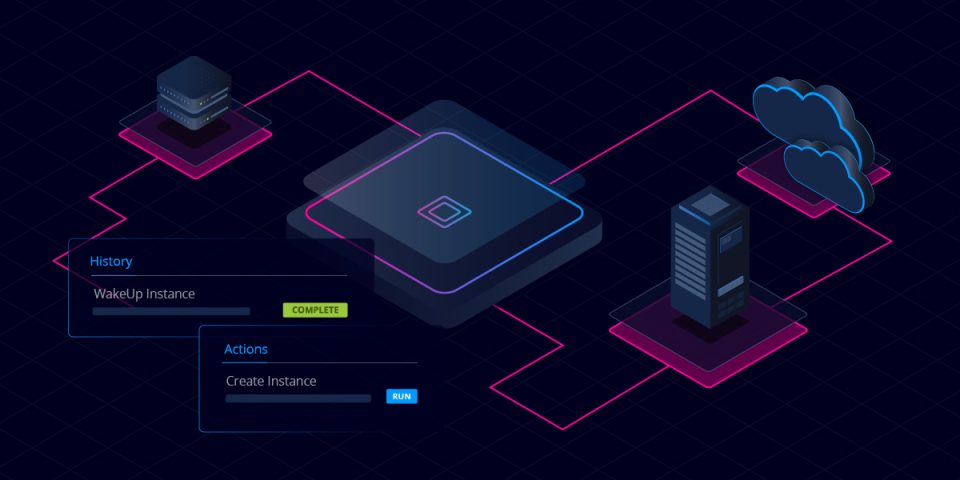
With the Itential Platform, we built a solution that simplifies this complexity:
Watch for the hands-on details:
When load balancer configs need changes later, it’s easy. When new compliance requirements emerge, implementation is seamless. The system creates an action that updates the service and tracks all changes.
Best of all, teams keep their existing tools. We’ve just added smart orchestration around their automation work and transformed it into a cohesive product system.
But if it’s so easy, why isn’t everyone doing this already? Why are teams struggling to manage services at scale?
I’ve worked with many organizations struggling with service management at scale. Here are the most common challenges:
Most organizations have automation components but lack the orchestration layer and stateful tracking needed for cohesive management. Orchestration is what enables both delivery and management at scale. That’s what makes it real.
Cloud, network, and security teams all contribute critical components to application deployment. But the real challenge begins rather than ends at provisioning. When infrastructure is treated as a one-time task, complexity increases exponentially. Change requests pile up, shadow IT spreads, and teams waste resources maintaining services without proper tracking.
But what if you could treat infrastructure like a product — self-service, managed across its lifecycle, and easy to turn up and turn down? With Itential, that’s not a hypothetical:
This is true lifecycle-managed orchestration — not just automating deployment, but managing the evolution, optimization, and eventual retirement of services at scale.
Your infrastructure forms the foundation of every digital service you deliver. Teams that embrace a product mindset — with the right technical capabilities — consistently win on speed, security, and scalability as business demands grow.
See how Itential connects AI reasoning to governed execution across your entire infrastructure.