You write the automation. You own the git repos. You keep production running. Itential is the agentic operations platform for what you’ve already built, plus the tools to build agents, generate workflows from plain language, and stop being the only person who can run any of it. Open source. MCP-native. No black box.
You wrote the scripts. You built the playbooks. You know how all of it works, which means every change request, every compliance check, and every “can you just run this real quick?” lands with you. The ticket queue doesn’t stop. The change windows don’t move. Now someone wants you to add AI on top of all of it.
Your scripts and playbooks are solid, but they only run when you run them, which makes you the bottleneck.
Every site has exceptions. Every team has one-offs. Brownfield automation means dealing with how things actually are.
Config checks after the change window is the wrong order. By then, drift is already in production and audit exposure has started.
Agents are entering infrastructure whether you want them to or not. Without a governed execution layer, they’re a liability, not a productivity gain.
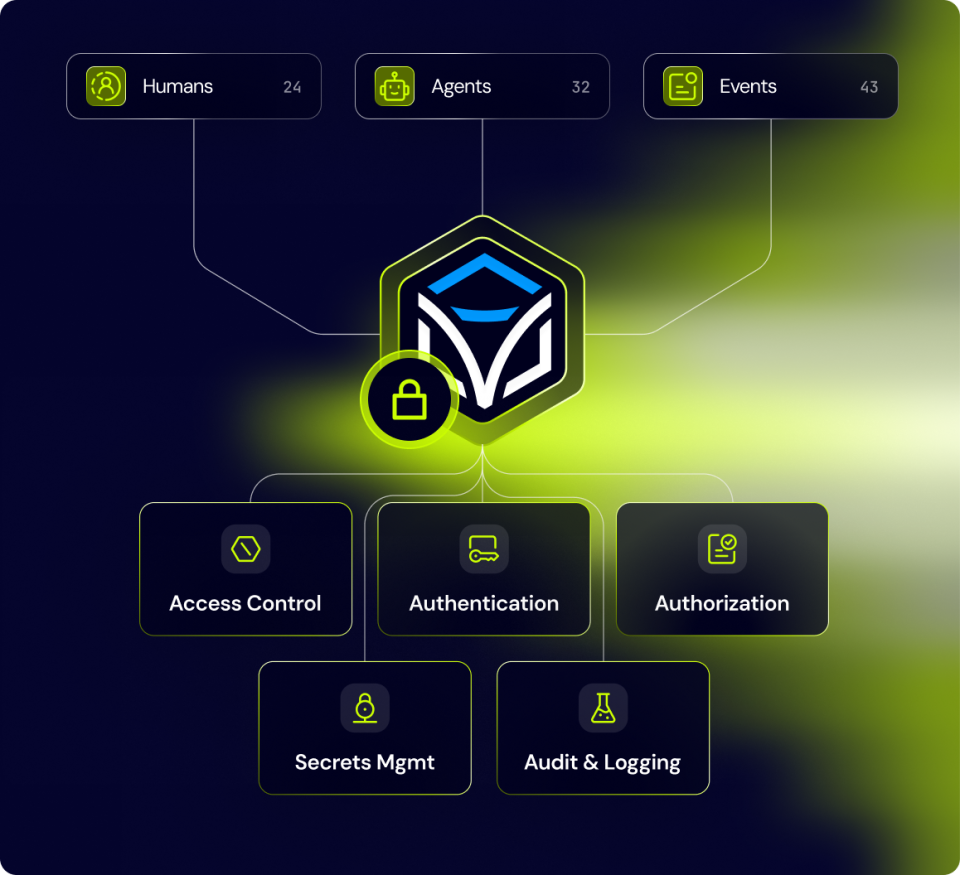
Itential gives engineers one platform to build, govern, and run the automation their organization depends on. Connect your existing scripts, Ansible playbooks, and OpenTofu plans. Build new workflows in the visual studio or from plain-language intent with Spec-Driven Development. Deploy agents when you’re ready. Everything runs through the same governed execution.
Engineers using Itential are running hundreds of thousands of governed automations every month, cutting change cycle times from days to minutes, and shipping more with the same team. The automation they built once now runs safely across the whole organization.
How engineers at a major FinTech moved network software upgrades and configuration changes off the yearly change calendar, saving 2,313 hours and 1.11 FTE across a multi-vendor estate.
How a Tier 1 service provider returned 100,000+ engineering hours, cut manual-error faults by 98%, and improved change productivity 25x, when engineers stopped firefighting and the process stopped being fragile.
How a global investment bank paired high-code automation engineers with low-code network engineers on Itential, turning months-long firewall requests into same-day delivery and turning two engineering styles into one operating model.
How a non-developer network supervisor built a production-ready workflow in a single two-hour workshop with zero prior automation experience, then scaled the same builder pattern across a 9,000-device, 1,000-location network.
Because the engineer who builds it should decide how it runs. Itential gives you the platform to build agents and workflows however you want: in the visual studio, from plain-language intent with Spec-Driven Development, or by connecting scripts and playbooks you already have. Everything runs through the same governance.
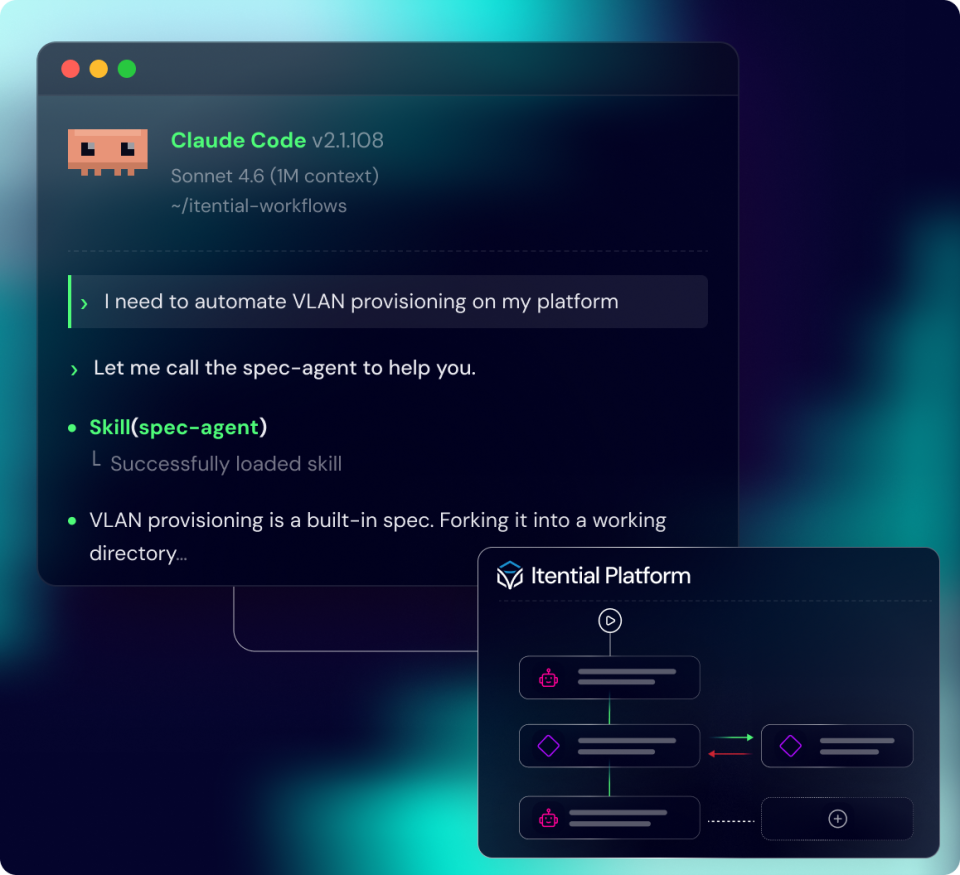
Visual studio for workflows. Connect your existing scripts. Or describe what you need in plain language and Spec-Driven Development generates the scaffolding. You review, version, and run everything through the same governance.
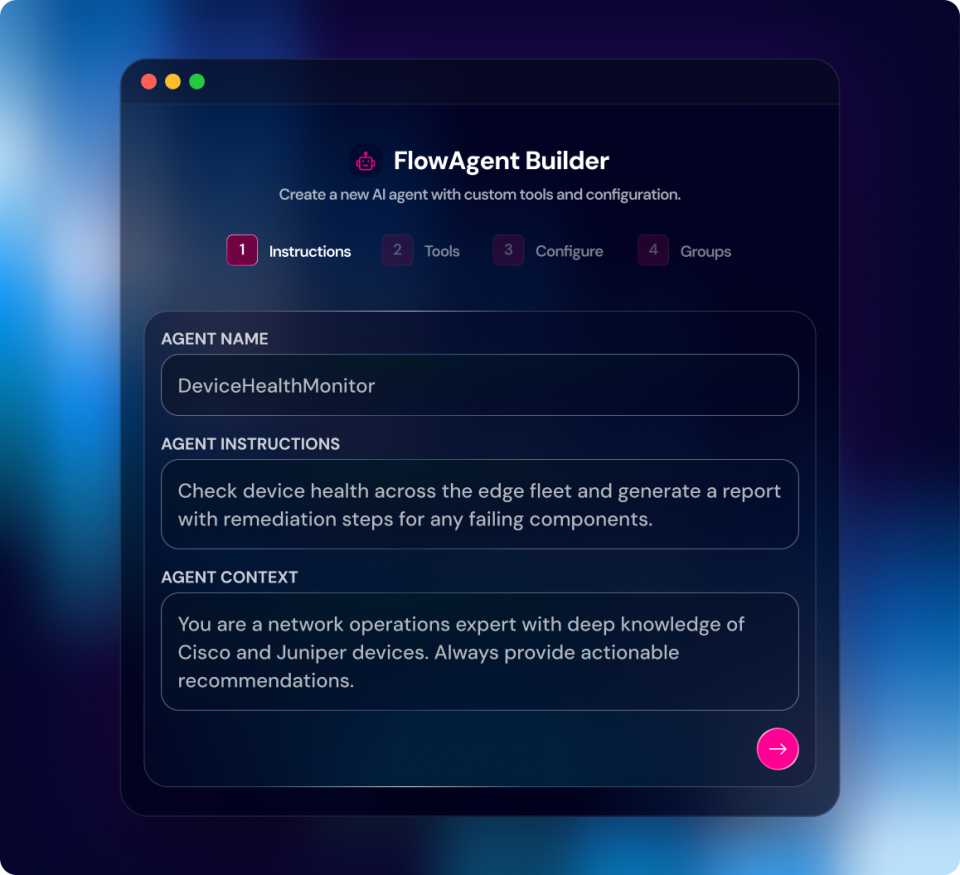
FlowAgent Builder handles agent goals and tool access. Governed workflows handle deterministic execution underneath. Same RBAC, same audit trail, same rollback, whether a human or an agent initiated it.
Publish what you’ve built as governed self-service operations. Ops teams run it. You stay in control of what runs, who can trigger it, and what happens when something goes wrong.
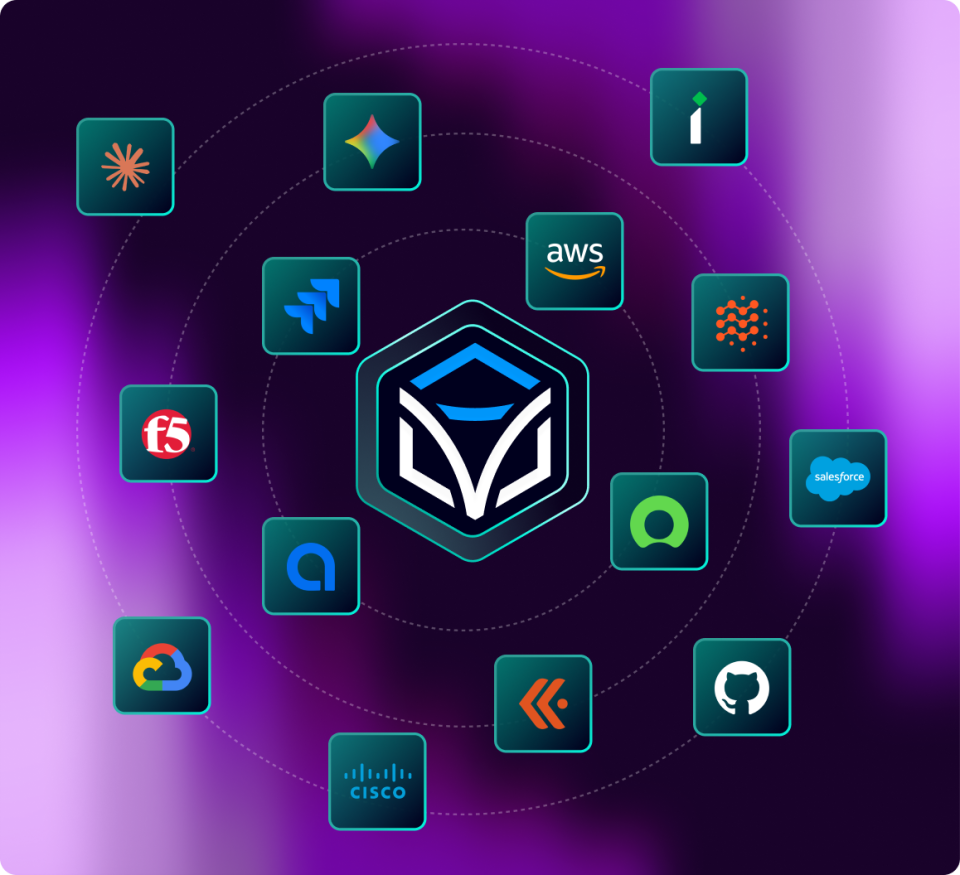
1,000+ open source integrations, community-contributed workflows and agents in the Itential Marketplace, MCP-native architecture. No lock-in. No waiting on a vendor roadmap.
See how engineers use Itential to govern the automation they’ve already written, publish it safely across the org, and add agents when they’re ready, on infrastructure that can’t afford to get it wrong.
No. Itential connects to your source control and runs your existing scripts, Ansible playbooks, and OpenTofu plans in your environment as-is. No rewrites. Governance, RBAC, and audit logging get added on top of what you already built.
You can. Most teams who DIY end up spending 12 to 18 months building governance, RBAC, audit logging, secrets handling, multi-vendor connectors, and rollback, on top of the automation they actually wanted to write. Itential ships with all of that plus an open source marketplace of 1,000+ integrations. Your scripts and playbooks still live in your git repos. You decide what runs. We handle the parts that would otherwise take a year to build.
That’s fine. Itential works without agents. Your scripts, playbooks, and workflows run exactly as they do today, just governed, auditable, and safely executable by other teams. Agents are there when you’re ready, not before.
Ansible playbooks, Python scripts, OpenTofu plans, golden config templates, and workflows, whatever the task calls for. You describe intent in plain language, SDD generates it, you review it before it runs. Everything generated executes through the same governed engine as your existing automation.
Automations are your existing scripts and playbooks (Python, Ansible, OpenTofu, CLI) running in your environment through a governed execution layer. Workflows are multi-step, multi-system orchestrations built in the visual studio or generated via SDD that coordinate across tools, teams, and domains. Most engineers use both. Scripts handle targeted tasks. Workflows handle end-to-end operations.